
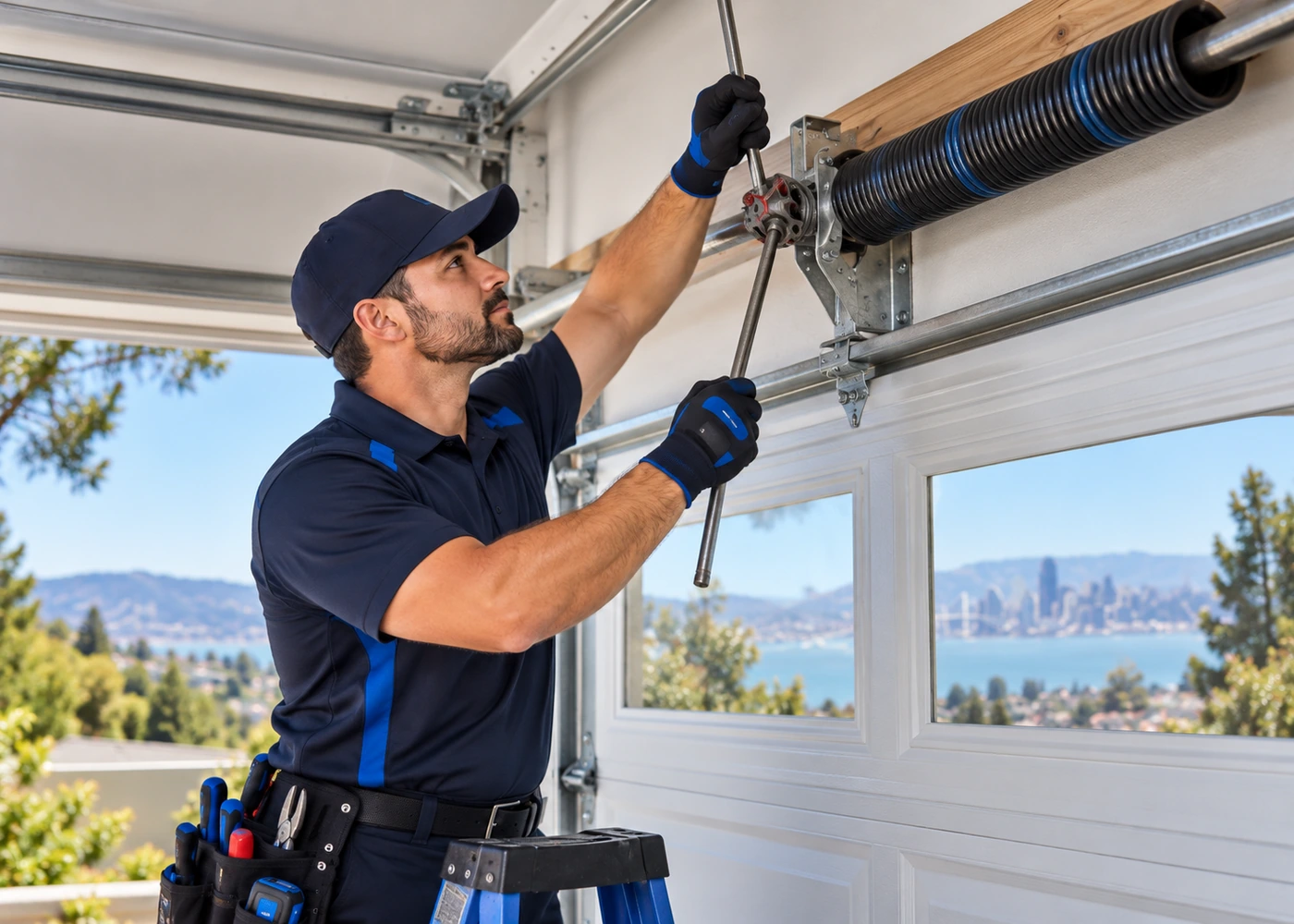
Why Garage Door Springs Matter
The spring system offsets much of the weight of the door so it can move in a controlled way. When a spring breaks or weakens, the door may feel much heavier and the opener can be forced to work harder.
Common Signs Of Spring Trouble
Visible separation in a torsion spring, a loud bang from the garage, a door that lifts only a few inches, or a door that becomes unusually heavy can all point to spring-system trouble.
Spring Work Requires Care
Garage door springs store significant energy. Avoid attempting to wind, unwind, remove, or adjust high-tension spring components without proper tools and training.
What We Check During Service
- Door balance and travel
- Tracks, rollers, hinges, cables, springs, and related hardware
- Opener response, limits, remotes, wall control, and safety sensors when applicable
- Visible wear, damage, looseness, or alignment concerns
- Final operation after service work
Frequently Asked Questions
A description, photo, or video can be helpful, but many garage door problems require an in-person inspection because several components can create similar symptoms.
If the noise is sudden, severe, or accompanied by uneven movement, visible damage, or a hanging cable, stop using the door and request service.
Yes. An opener can struggle or stop because the door is poorly balanced, binding, or mechanically difficult to move. The door and opener should be considered together.
Yes. The website is set up for residential garage door service requests in Oakland, California.
Call (510) 281-0477 or use the service request form on the Contact page.