
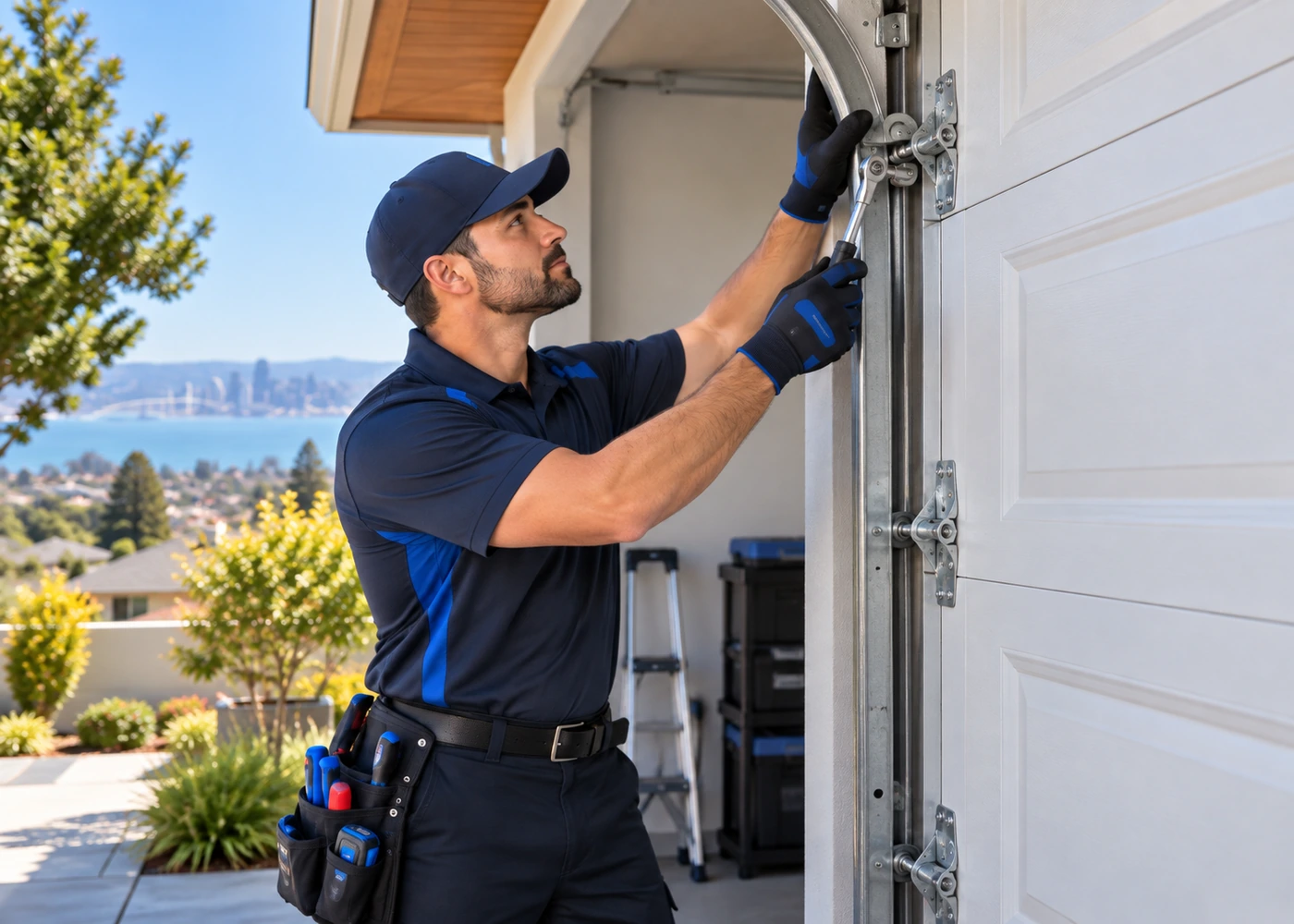
Professional Garage Door Troubleshooting
Garage doors can stop operating normally for many reasons, including spring fatigue, cable wear, roller damage, track problems, opener faults, loose hardware, or panel damage. A complete inspection helps separate the visible symptom from the actual cause.
Repairing The System As A Whole
A door may have more than one issue at the same time. For example, worn rollers can add resistance while an opener struggles to move the door. Service should consider balance, alignment, hardware condition, and opener function together.
When To Stop Using The Door
If the door is crooked, hanging from a cable, off track, extremely heavy, or making sudden impact sounds, avoid repeated operation. Continued use can place additional strain on other parts of the system.
What We Check During Service
- Door balance and travel
- Tracks, rollers, hinges, cables, springs, and related hardware
- Opener response, limits, remotes, wall control, and safety sensors when applicable
- Visible wear, damage, looseness, or alignment concerns
- Final operation after service work
Frequently Asked Questions
A description, photo, or video can be helpful, but many garage door problems require an in-person inspection because several components can create similar symptoms.
If the noise is sudden, severe, or accompanied by uneven movement, visible damage, or a hanging cable, stop using the door and request service.
Yes. An opener can struggle or stop because the door is poorly balanced, binding, or mechanically difficult to move. The door and opener should be considered together.
Yes. The website is set up for residential garage door service requests in Oakland, California.
Call (510) 281-0477 or use the service request form on the Contact page.